Michelle Ly, LCSW: La Selva Group’s New Director of Residential Admissions
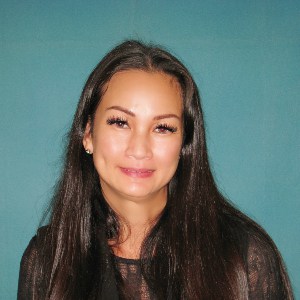 Michelle Ly, LCSW is the Director of Residential Admissions at La Selva Group. She has over 19 years of experience in mental health services. She has experience working in multiple settings in mental health and social work (e.g., residential, outpatient clinic, medical social work, and inpatient psychiatric behavioral health). Michelle has a bachelor’s degree in Child Development and a master’s degree in Social Work. Her passion in mental health and social work stems from her own life experiences, perseverance, and resilience.
Michelle’s Contact Info:
Email: MLy@momentummh.org
Phone Number: (650)323-1401
Meet La Selva Group’s New Director of Operations: Anthony Miller, LMFT
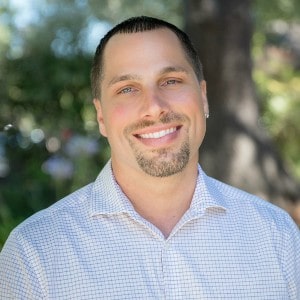 La Selva Group, a division of Momentum for Health, is excited to introduce Anthony Miller as our new Director of Operations!
Anthony is a licensed Marriage and Family Therapist who has over 15 years of mental health experience in various settings throughout the Bay Area. He holds a bachelor’s degree in Sociology and Master of Science Degree in Clinical Psychology from Notre Dame De Namur University. Prior to working at Momentum, he was working in the Tenderloin District of San Francisco as the Program manager of a 60-bed program, working with Ex-offenders transitioning back into our communities.
Anthony started working at Momentum in 2011 as an Assistant Manager/Clinician at the SART program in San Jose. He was promoted in 2013 to Program Manager/Clinician of Litteral House and then promoted shortly after to Director of Residential Services for The La Selva Group in 2014. Anthony has recently been promoted again to his current position, serving as the Director of Operations for The La Selva Group.
In Anthony’s new role of Director of Operations, he collaboratively helps synchronize the multiple programs under La Selva’s umbrella of encompassing services ranging from the Residential program to our Wellness Center, as well as our Supportive Housings and everything in between. Anthony has a strong foundation working across systems and developing continuums of care. He utilizes both his clinical and operational experience to connect the dots and support the ever evolving La Selva community. Anthony works from a strength-based model and takes great pride in helping clients thrive. He is a firm believer that the greatest power is to empower others. When Anthony is not working, he is spending time with his wife and children, practicing physical fitness, and gardening in his backyard.
La Selva Residential has always been a starting point for many of the clients in our community. As Anthony is promoted from Residential, he is passing the torch on to Michelle Ly.
La Selva Group’s Esperanza House Helps Women Recover from Trauma
 In celebration of Women’s History Month last March, we took a look inside Esperanza House, a unique program for women recovering from trauma.
We asked Brenna Connolly, Director of Outpatient Services for the La Selva Group, about the program, challenges during the pandemic, the rewards of her work, and how people can connect with the house.
What is Esperanza House?
Esperanza House is a supportive housing site dedicated to treating women who identify as experiencing trauma. The house provides trauma informed care through individual therapy, group therapy and medication management. Residents live independently but have strong daily support that is both therapeutic and practical (helping them cook food for each other, help with shopping, or help with job searching). The house is run by lead clinician Kathleen Grey, AMFT, with support from Maya Kehoe. Kathleen supports residents with therapy, and together, Kathleen and Maya meet their residents’ day to day needs with compassion and care.
What challenge has the Esperanza House and clients faced during the pandemic?
Isolation. Our program thrives on helping individuals thrive through building community and connection. Luckily, because we provide this type of housing, clients are able to connect with peers. However, help with building an outside community, finding work, going to support groups outside of La Selva has been extremely difficult. Despite these challenges, we are very proud that we have been able to provide “live” connection, support, and treatment throughout this pandemic.
What do you enjoy about your work?
- My team. La Selva and Momentum staff are beyond supportive and kind. We decided on day 1 of COVID that we would not change what we do here, despite the pandemic. It was extremely hard on our personal lives, but my team was courageous and knew it was best for the clients and the community. I love what I do because of the people I work with.
- The clients. I cannot tell you what an honor it is to be by these client’s side as they take this very difficult journey. They make a conscious decision to be vulnerable and to work harder than everyone else to better their lives and circumstances. This is so courageous and so HARD. It is powerful to see this happen before your eyes. I am proud of every single person that has come through this program. They have not only helped themselves, but they have connected with peers and helped other’s as well.
What is a challenge in your work?
The sadness we see. It takes a toll to see people hurting and struggling every day. The trauma that some of our clients have endured (or are enduring) affects us all personally.
How can people get help or get involved with Esperanza House?
Just call our admissions directors (Monika and/or Michelle). Depending on the level of care someone is needing, they just need to come to us and we can work with them to try to get them into one of our programs.
We are pleased to share with you a message from La Selva’s Clinical Director, Brenna Connolly, Psy.D.
 La Selva Group is excited to announce an expansion of our outpatient facilities and capacities.
Recently, we added space and services to our current location at 206 S. California Avenue in Palo Alto to accommodate expanding needs in the Intensive Outpatient Program and Partial Hospitalization Program. This expansion was necessary to not only meet our community’s needs and improve accessibility by reducing our admissions waitlist.
Despite the pandemic, La Selva has been able to remain open and continues to be strongly committed to providing a safe and healthy environment in which to receive services. We recognize the need to provide in-person care to our clients and have seen the benefit of doing so. La Selva adheres to the guidelines required by the CDC, the county and state as well as Momentum for Health’s internal quality department. All of our staff have been vaccinated. In addition, staff and clients receive weekly testing on-site, wear masks and adhere to social distancing requirements.
Our services include:
- A new no-cost COVID support program: This program includes virtual counseling to those suffering from the emotional impact of the COVID-19 virus and the impact of the COVID restrictions and directives on their lives. Many in our community struggle with the fear of getting the COVID-19 virus, the impacts of quarantine and the loss of employment which can all contribute to relapse and/or increased depression and anxiety. For further information on this program, please contact Karen Sala-Caballero at (408) 575-8449.
- Insurance based residential and supportive housing sites
- Insurance based outpatient services including a Partial Hospitalization Program (PHP) and Intensive Outpatient Program (IOP) providing extensive group therapy, intensive medication management and individual therapy
- Specialized treatment in trauma, co-occurring disorders and Functional Neurological Disorder (FND)
- A private pay Day Program
- A Community Clinic that provides no-cost psychiatry, counseling and access to the day program for those who qualify
If you would like to contact Brenna Connolly, Psy.D. please call (650) 617-1750
La Selva Group Opens a New Virtual Counseling Service
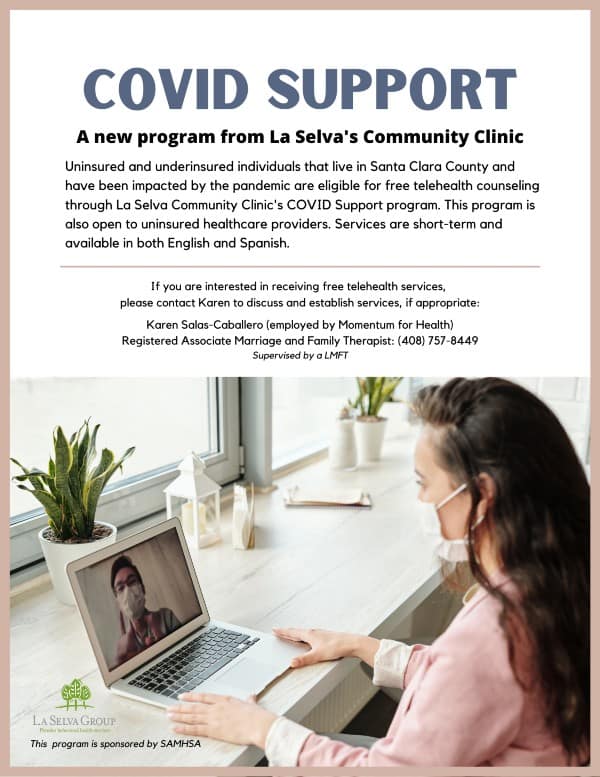
In La Selva’s efforts to best serve our community we have opened a new virtual counseling service for those struggling with the changes we all have had to make with the COVID-19 virus. We know many are home feeling isolated, depressed and anxious. As a result, we have created a new program, called COVID Support, that provides FREE virtual counseling services with a Bilingual, English and Spanish speaking clinician that can be a support for you through these very difficult times.
This new complimentary program is funded by the Substance Abuse Mental Health Services Administration (SAMHSA). To begin this service, please call the number listed on the flyer.